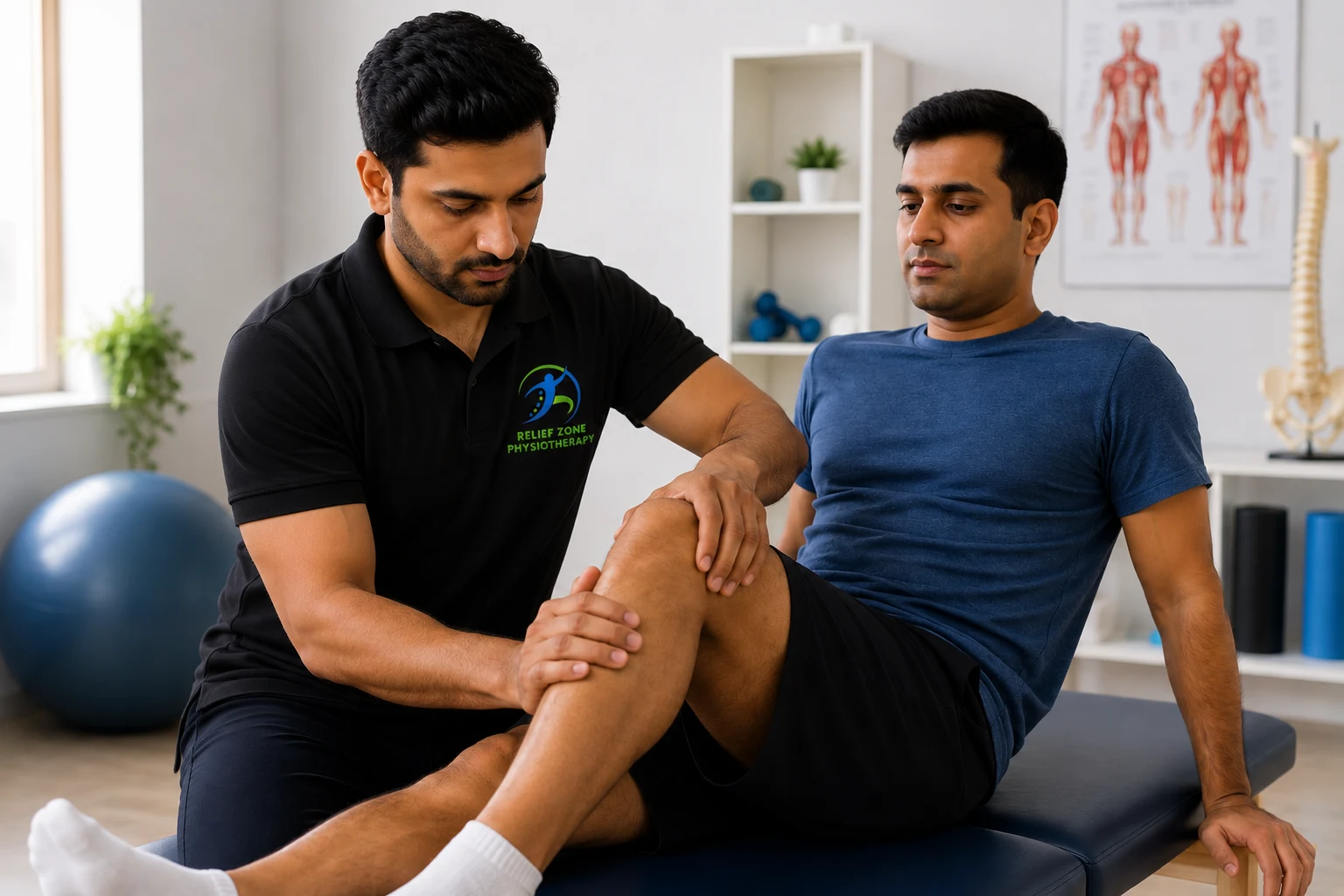
Ankle Sprain & Pain Treatment in Ghaziabad - Recover Right, Not Just Fast
From a fresh twist to an ankle that’s “never felt the same” since — we treat both, properly.
Physiotherapist Specialist
StiIl lcing That Sprain? Here's What Actually Speeds Up Recovery
Most people treat every ankle sprain the same way—rest it, ice it, and wait it out—but that advice hasn’t kept pace with what actually works. Ankle sprains are graded I to III based on how much the ligament is stretched or torn, and that grade changes what recovery should actually look like. Complete rest for two weeks, once considered the standard, now tends to produce worse long-term outcomes than getting the ankle moving again within the first few days, once pain allows—because the ankle needs to relearn balance and control, not just heal the ligament itself. This is the real reason so many people say their ankle “never felt the same” after an old sprain: it healed, but nobody rebuilt the stability and proprioception it lost, so it kept giving way months or years later. Our physiotherapy for ankle sprains is built around exactly that gap—not just calming down the injury, but retraining the ankle to actually trust itself again.
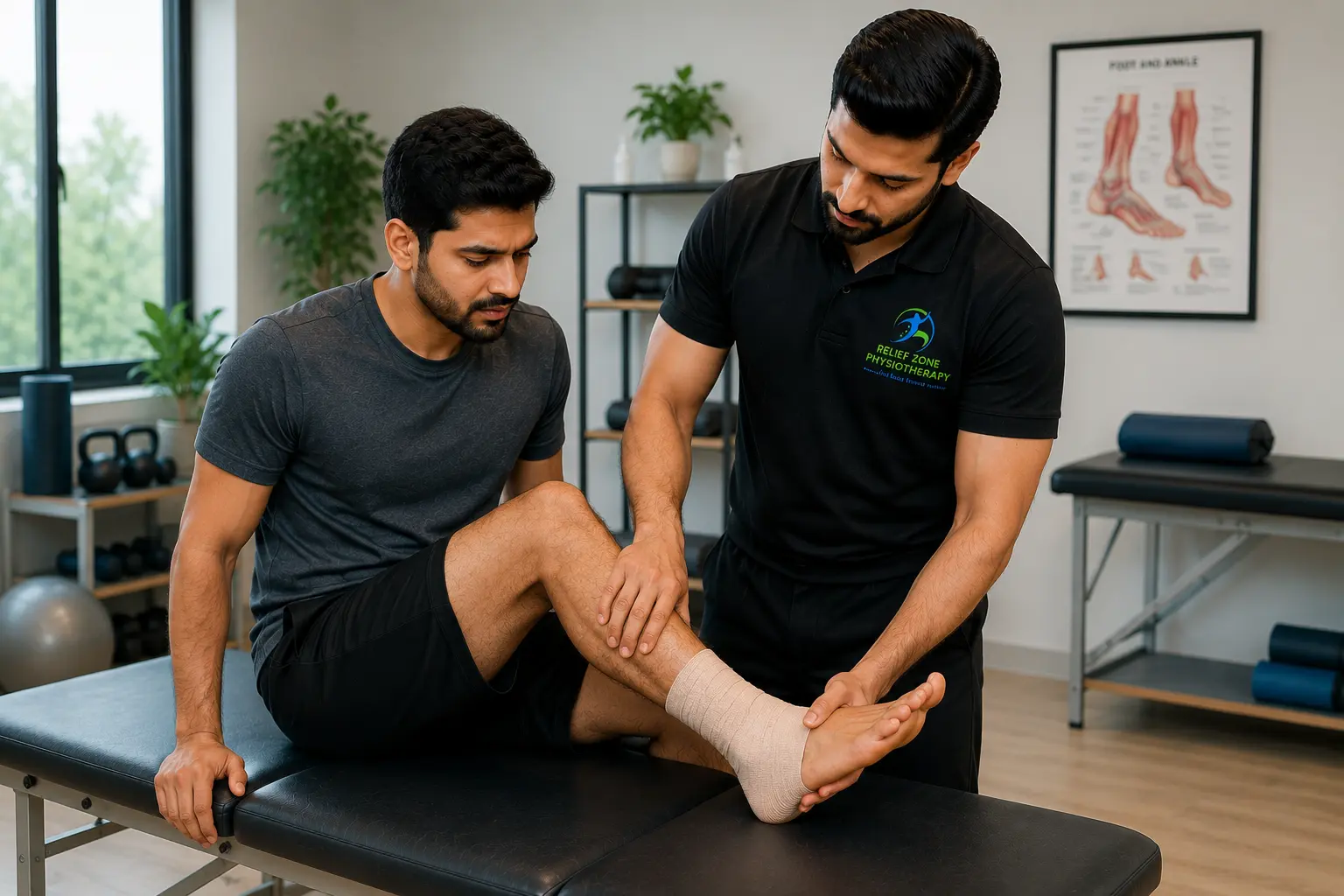
Our Treatment Process
- Assessment
Grading the sprain and ruling out anything needing imaging first.
- Diagnosis
Identifying which ligaments are involved and how severely.
- Personalized plan
An ankle sprain treatment plan matched to the grade and your recovery goals.
- Treatment
Manual therapy, guided movement, and progressive strengthening.
- Recovering and Preventing
Balance training to prevent the instability that leads to repeat sprains.
Common Symptoms
- Persistent pain and swelling despite resting for number of days
- The spread of bruising past the ankle area
- An ankle that 'gives way' when walking on uneven surfaces
- Inability to bear weight on the affected foot
- Prolonged stiffness even after the swelling has gone down
- A history of recurrent sprains involving the same ankle
Benefits of Physiotherapy
- Reduces pain and swelling faster than rest alone
- Restores full ankle mobility and flexibility
- Rebuilds the balance and stability lost after a sprain
- Meaningfully lowers the risk of re-injury
- Speeds up safe return to sport or daily activity
- Non-surgical and drug-free for the large majority of cases
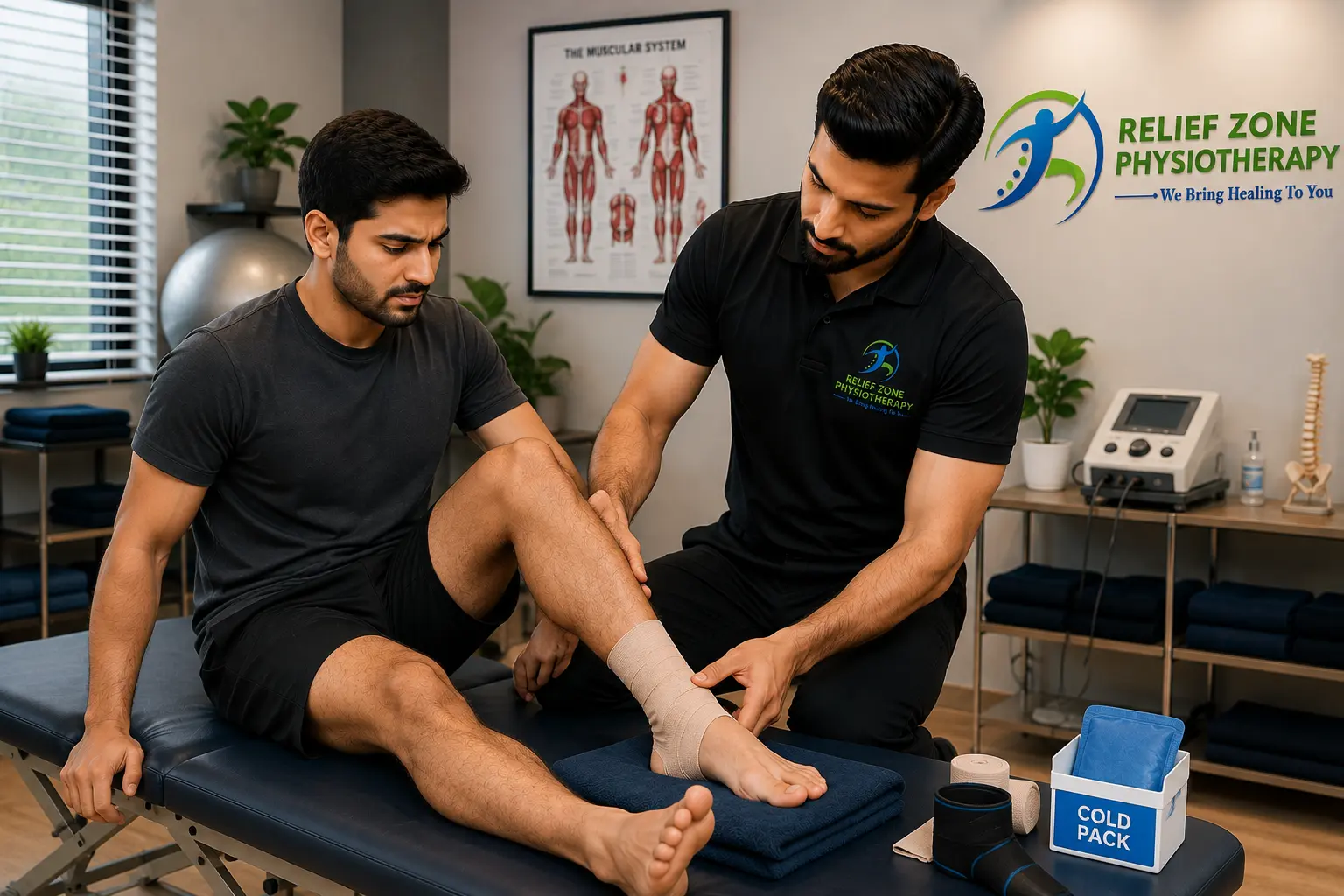
- At Clinic
Clinic Visit
Our Ghaziabad clinic is equipped for the balance and proprioception training that makes the real difference in ankle recovery — resistance-based strengthening, guided weight-bearing progression, and supervised balance work that’s difficult to replicate without the right setup. This approach is often the better choice for Grade II-III sprains or for athletes working toward a specific return-to-sport timeline
- Guided balance & proprioception training
- Resistance-based strengthening equipment
- Structured, progress-tracked sessions
- One-on-one physiotherapist supervision
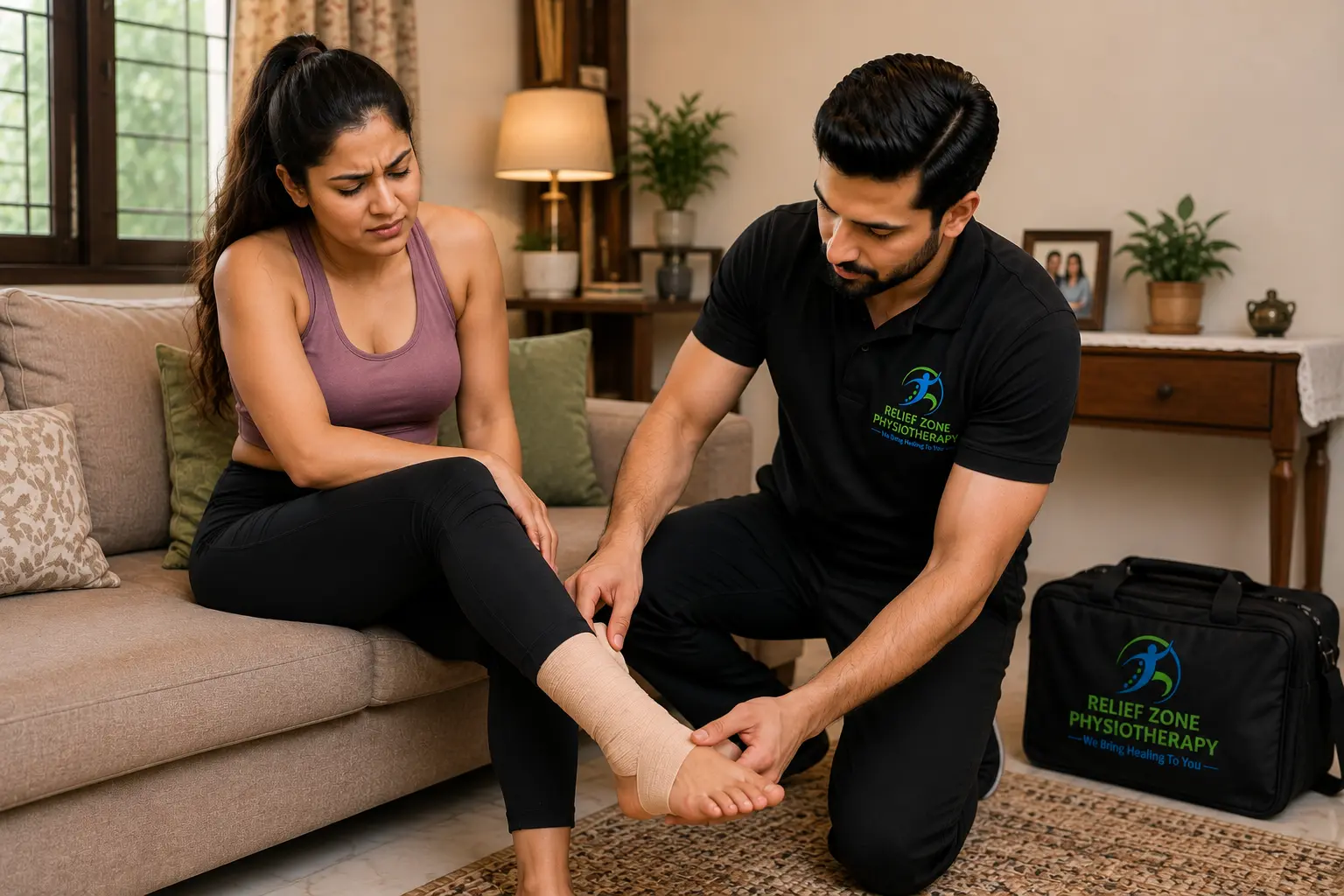
- At Home
Home Visit
Are you unable to bear sufficient weight on your ankle to travel? Our physiotherapy ankle sprain treatment specialist at home assesses first before administering any exercises right to your doorstep — an ideal choice during those painful initial days of healing. Our trained physiotherapist in Ghaziabad ensures you recover faster, safely and confidently from the comfort of your home.
- Certified physiotherapists right at your doorstep
- Ankle rehabilitation customized to suit your needs
- Convenient appointment scheduling
- Comfortable and familiar treatment environment
Frequently Asked Questions
Should I rest my sprained ankle completely, or keep moving it?
Keep it moving, within what pain allows. Complete rest for days at a time is outdated advice for most Grade I and II sprains — early, guided movement is what actually rebuilds the strength and balance the ankle needs, while resting completely tends to leave lingering instability behind.
Do I need an X-ray for my ankle sprain?
Not always — a lot of sprains can be assessed clinically without imaging. It becomes important if you can’t take a few steps at all, or there’s specific tenderness over the bone itself rather than the surrounding soft tissue. If either applies, get it checked before starting physiotherapy.
Why does my ankle keep giving way months after the original sprain?
This is one of the most common things we hear, and it’s almost always the same reason: the ligament healed, but the balance and stability the ankle lost during the injury never got properly rebuilt. That’s what proprioception and balance training in physiotherapy specifically addresses — not the original injury, but the instability it left behind.
How long does it actually take to recover from an ankle sprain?
It depends heavily on the grade. Mild (Grade I) sprains often improve substantially within 2-3 weeks with the right approach. Grade II sprains typically need 4-6 weeks of structured rehabilitation. Grade III sprains — where the ligament is significantly torn — can take a couple of months, and occasionally need a surgical opinion alongside physiotherapy.
Can physiotherapy help even if my sprain happened months ago?
Yes, and it’s a genuinely common reason people come to us — an old sprain that “never really healed right.” At that stage, treatment focuses less on the original injury and more on rebuilding the strength and balance that were never fully restored the first time.
Do you provide ankle pain treatment at home in Ghaziabad?
Yes, across Indirapuram, Vaishali, Vasundhara, and Raj Nagar Extension. Home visits work well in the early, more painful stage of recovery — for balance and proprioception work later in rehab, we may suggest alternating with clinic visits.
Book Your Appointment
Explore Other
Treatment
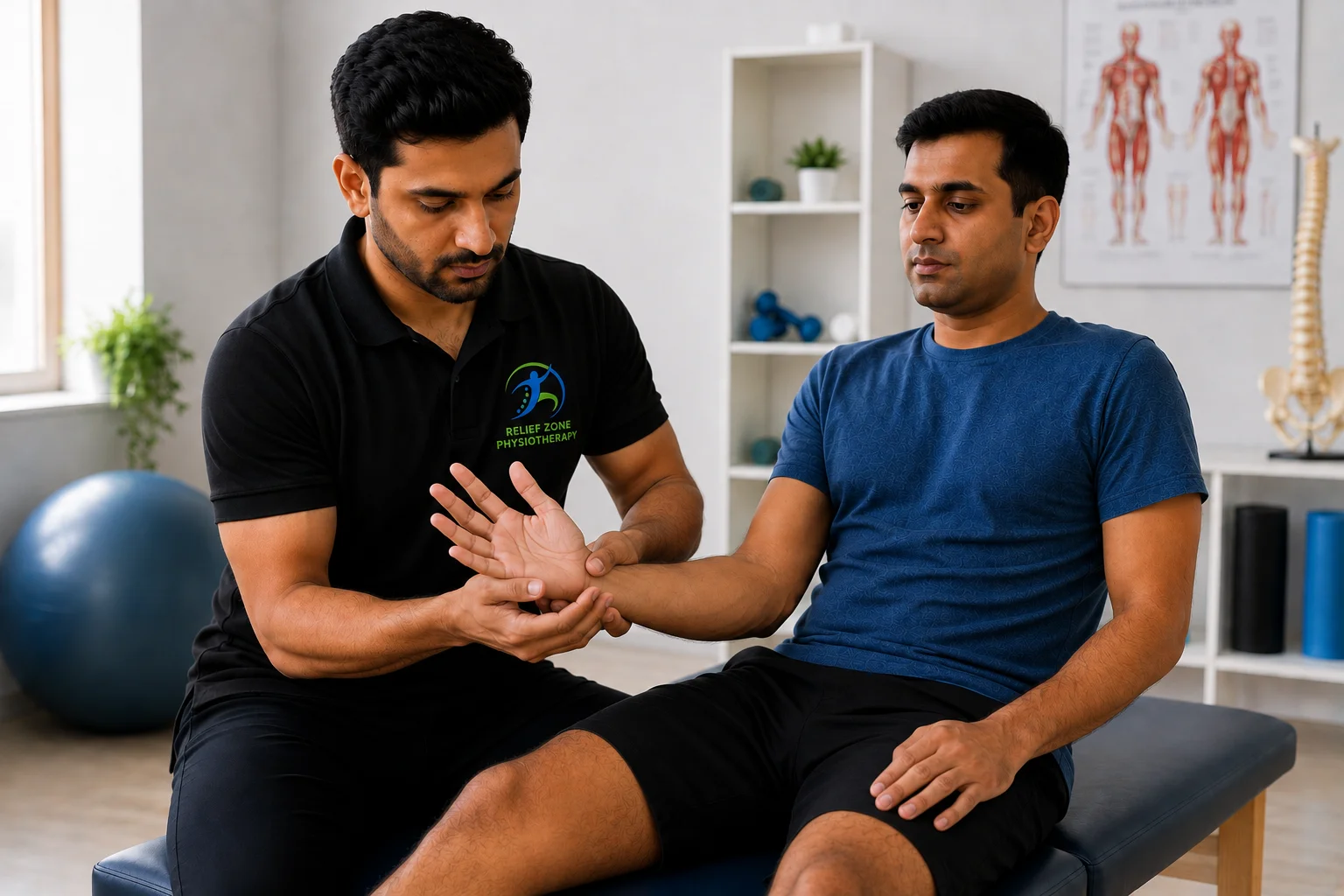
Wrist Pain Treatment
Reduce wrist pain, improve flexibility, strength, and restore comfortable hand function.